The Loudest Problem Is Often Not the Costliest One
Most businesses do not run out of things to fix. They run out of attention. That is why the first strategic question is not what can be improved, but which improvement would actually change the business.
Customer Research Shapes Decisions But Flawed Data Can Misdirect Strategy and Waste Resources
Every online entrepreneur knows the value of customer feedback. It promises clarity, validation, and a direct line to the customer’s mind. Yet, all too often, that feedback becomes a source of confusion rather than clarity. The problem is not just collecting data but diagnosing when the data is misleading, contradictory, or simply noise dressed as signal.
The Problem Is Not Always Your Product or Marketing
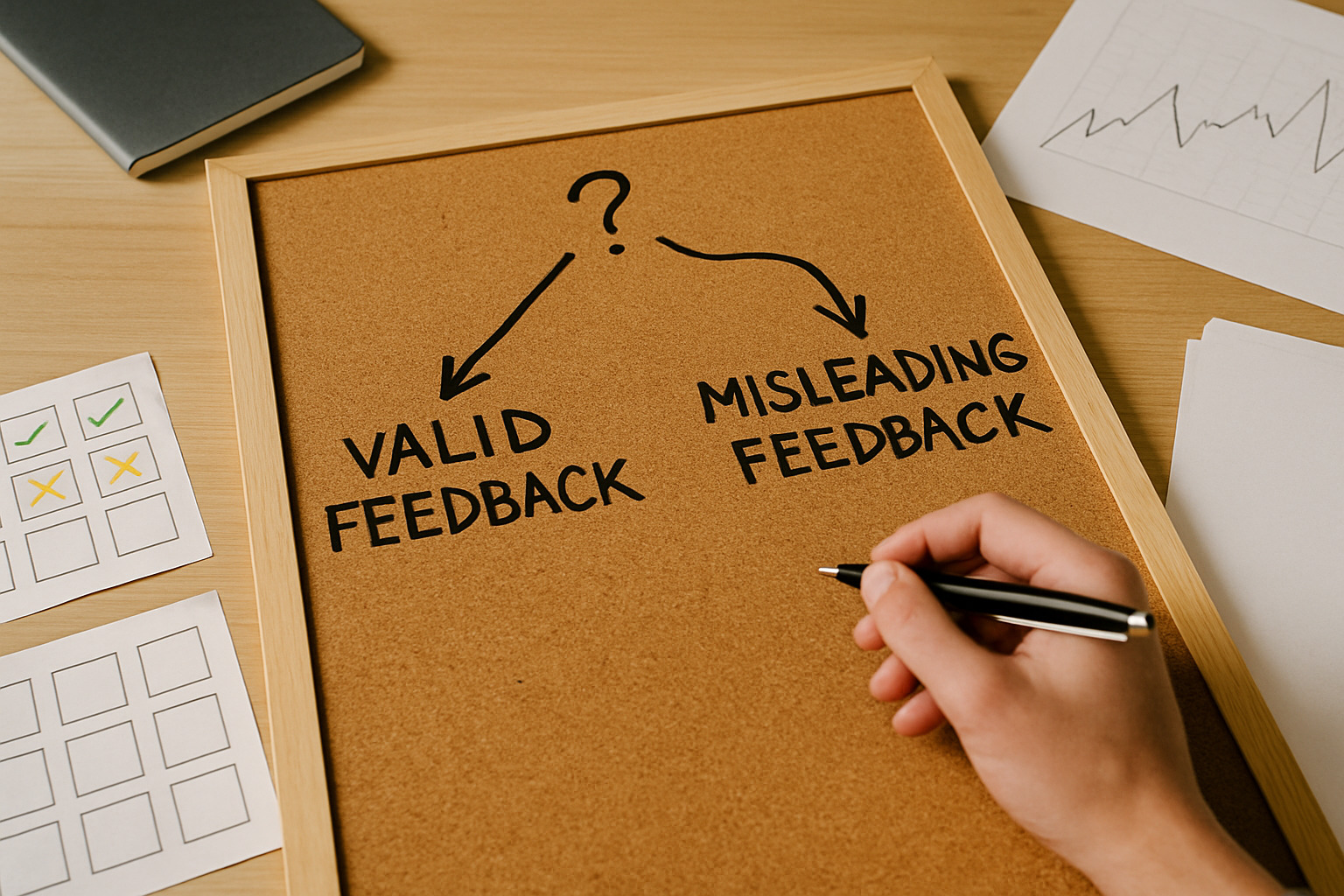
When feedback feels like a jumble of conflicting opinions or vague desires, the temptation is to blame the product, the messaging, or the marketing channels. But more often, the root cause is the quality of the feedback itself. Customer research mistakes can turn good intentions into poor decisions. A product tweak based on biased feedback may alienate the core audience. Messaging changes driven by irrelevant input can dilute your brand voice. The real question is why the feedback misleads.
Why Good Intentions Fail in Customer Research
Entrepreneurs often assume more feedback equals better decisions. This assumption ignores the messy reality of data collection and interpretation. For example, a newsletter creator might ask subscribers what topics they prefer but only receive answers from the most vocal minority. An ecommerce brand may rely on post-purchase surveys skewed toward satisfied customers, missing critical insights from silent detractors. A consulting package seller might frame questions in a way that nudges respondents toward positive answers.
Intentions matter less than the conditions under which feedback is gathered and interpreted. Without careful design and filtering, customer research can reflect biases, leading questions, or irrelevant opinions.
Every Metric Competes for Attention: Diagnosing Misleading Feedback
Here is the strategic lens to apply: The Three Filters of Reliable Customer Insight. Before you trust any feedback, ask these questions:
- Source Credibility: Who is giving the feedback? Are they representative of your target market or a vocal outlier? What incentives or biases might color their responses?
- Question Design: How was the feedback solicited? Were questions neutral and open-ended or leading and restrictive? Did the format encourage thoughtful answers or quick clicks?
- Context Relevance: Does the feedback relate directly to the decision at hand? Is it current and specific or outdated and vague? Does it connect to actual behaviors or just opinions?
Applying these filters changes how you see customer research. It shifts the focus from quantity to quality and from gathering more data to diagnosing which data matters.
Identifying and Filtering Biased or Irrelevant Feedback
Consider a digital product creator who launches a waitlist and receives enthusiastic comments. At first glance, this looks like strong interest. But applying the filters reveals issues: the commenters are a small subset already familiar with the creator, the survey questions were framed to prompt excitement, and the feedback lacks clarity on willingness to pay or actual usage.
Filtering out these misleading signals means resisting the urge to act on every positive comment. Instead, it means prioritizing feedback from new potential buyers, testing neutral questions about pain points, and observing actual sign-up rates rather than just comments.

Adjusting Research Methods to Improve Decision Clarity
When misleading feedback clouds judgment, the solution is not more data but better data. This often requires adjusting research methods to enhance the three filters:
- Improve Source Credibility by recruiting a broader, more representative sample. For example, a service business might reach beyond existing clients to prospects who declined the offer.
- Refine Question Design by avoiding yes/no or leading questions. Use open-ended prompts that reveal motivations and frustrations.
- Ensure Context Relevance by linking feedback to specific decisions. Instead of asking “Do you like this feature?” ask “How would this feature change your daily workflow?”
These adjustments help separate signal from noise and give entrepreneurs a clearer picture of what customers actually want and need.
What to Stop Doing This Week
Stop chasing every piece of feedback that lands in your inbox. Instead, start applying the Three Filters to decide which feedback deserves your attention. If a survey or comment does not pass the credibility, design, and relevance test, it is not worth acting on. This discipline prevents costly pivots based on misleading data and sharpens your focus on decisions that matter.
Ultimately, better customer research is not about more feedback. It is about knowing which feedback changes what you do next.
Every metric competes for attention. The real cost is not measuring the wrong thing, it is not measuring what gets ignored because of it.