The Loudest Problem Is Often Not the Costliest One
Most businesses do not run out of things to fix. They run out of attention. That is why the first strategic question is not what can be improved, but which improvement would actually change the business.
Customer Feedback Is a Signal, Not the Signal
Online entrepreneurs often treat customer feedback as a direct line to truth. The assumption is simple: ask customers, get answers, and improve offers or messaging. Yet, many find that after acting on feedback, conversion rates stall and retention falters. The feedback was there, but the expected lift never came. Why? Because customer feedback is never pure data. It is always filtered through human bias, timing, and context. The real business problem is how to see through these distortions before making decisions.
Why Bias Matters More Than You Think
Every piece of feedback represents a slice of reality, but not the whole picture. Bias in customer research means you are seeing a version of your audience skewed by who responds, how questions are asked, and when the feedback occurs. The cost is not just inaccurate insight. The cost is what you do next based on that flawed insight. Misguided offer changes, wasted marketing dollars, and confusing messaging all stem from unrecognized bias. Recognizing bias means you can treat feedback as a starting point, not the final word.
Four Bias Filters That Shape Your Customer Research
Successful businesses learn to look at feedback through specific lenses that expose common distortions. I call these the Four Bias Filters: Sampling Bias, Confirmation Bias, Response Bias, and Timing Bias. Each filter reveals a different way that feedback can mislead.
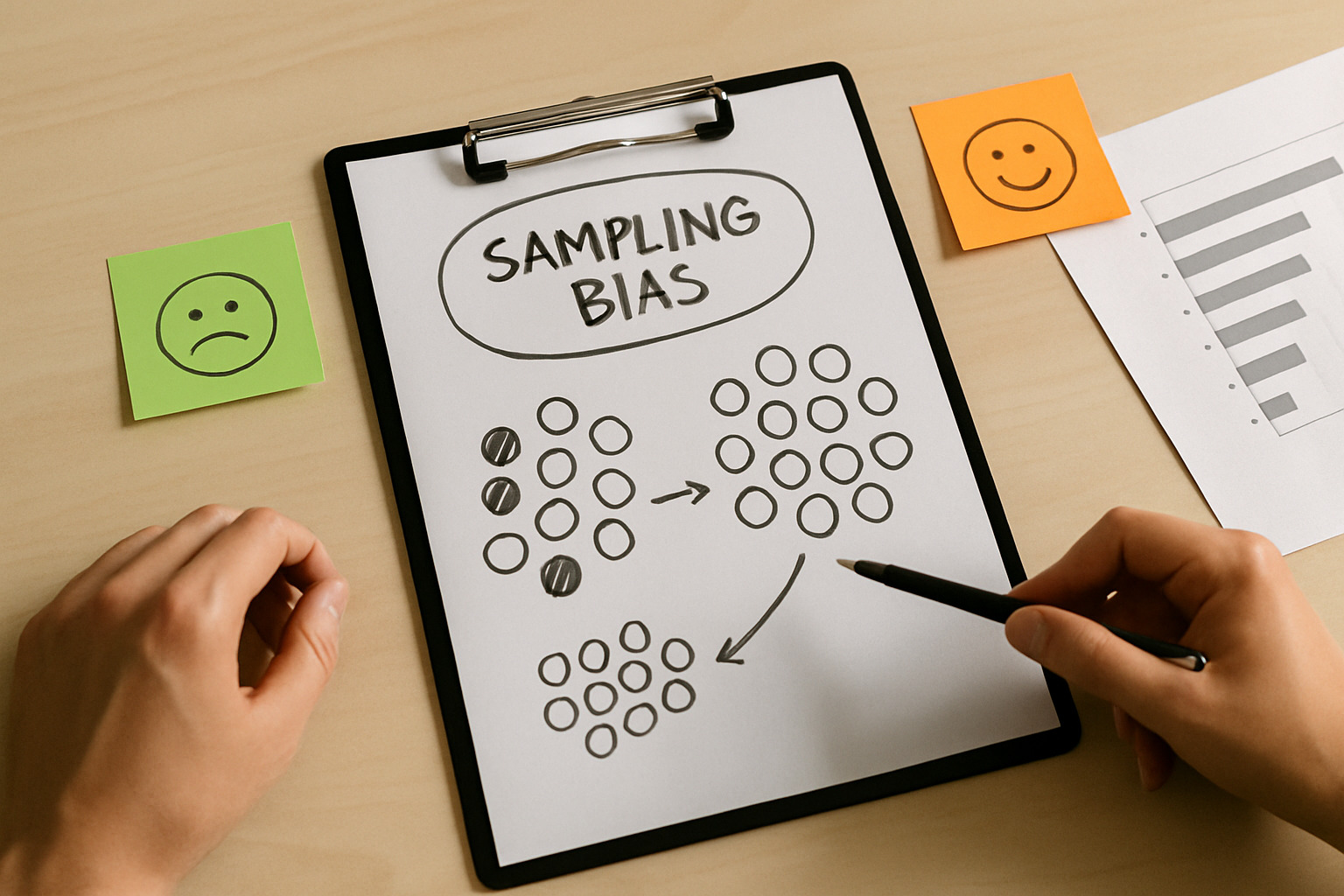
Sampling Bias: Who Is Really Talking?
Not all customers are equally likely to give feedback. Early adopters, vocal fans, or disgruntled users often dominate responses. This creates a skewed sample that does not represent the broader audience. For example, a newsletter creator who surveys only engaged subscribers may miss why casual readers drop off. The result is a misread on what to fix.
Confirmation Bias: Hearing What You Expect
When you ask questions expecting certain answers, the feedback tends to confirm your beliefs. This happens when you frame questions or interpret ambiguous responses in ways that support your assumptions. A digital product seller might ask, “What do you like about this feature?” ignoring what customers avoid. Confirmation bias narrows your view and blinds you to real issues.
Response Bias: What Customers Say Versus What They Do
Customers may say what they think you want to hear or what sounds polite, rather than their true feelings. This is common in direct interviews or surveys. For instance, a consulting package offer adjusted based on polite nods may still fail if actual purchase behavior does not align. Response bias creates a gap between stated preferences and actual decisions.
Timing Bias: When Feedback Arrives Changes Its Meaning
Feedback collected too early, too late, or at the wrong moment can misrepresent customer needs. A waitlist survey sent immediately after sign-up may capture enthusiasm but miss later doubts. Timing bias means the same customer can provide very different feedback depending on context. Successful businesses track when and how feedback fits into the customer journey.
Seeing Bias in Action: Practical Checks
Diagnosing bias starts with simple checks embedded in your feedback process.
- Sampling Bias: Compare respondent demographics to your actual audience. Track response rates across segments. If certain groups are missing, your feedback is incomplete.
- Confirmation Bias: Review questions for neutrality. Avoid leading language. Use open questions that allow unexpected answers. In analysis, challenge your assumptions actively.
- Response Bias: Cross-reference self-reported preferences with behavior metrics like click-throughs, purchases, or engagement time. Discrepancies signal response bias.
- Timing Bias: Map feedback against customer journey stages. Avoid over-relying on feedback from a single moment. Collect feedback at multiple points for a balanced view.

Integrating Bias Filters Into Your Research Cycle
Bias is not a one-time fix but a lens to apply continuously. Before launching surveys or interviews, ask which bias filters might distort the data. After collecting feedback, run it through these filters before deciding what to change.
For example, a creator testing a new email funnel might segment feedback by subscriber tenure (sampling bias), reframe questions to avoid leading (confirmation bias), compare survey responses to open rates (response bias), and collect feedback both after sign-up and after the first purchase (timing bias). This process reveals a much clearer picture than raw feedback alone.
When Ignoring Bias Becomes a Costly Mistake
Ignoring research bias means chasing false positives. You might obsess over features a vocal few want while missing broader audience needs. Or you might overhaul messaging based on polite feedback that does not translate to sales. These missteps waste effort and obscure the real problems. The work you stop doing often says more about your strategy than the work you add. In customer research, the work you ignore because of bias can do the same.
Look Beyond Feedback: What to Audit This Week
The strategic next step is clear: audit your latest customer feedback through the Four Bias Filters. Ask:
- Who responded and who did not?
- How might questions have shaped answers?
- Do responses match actual customer behavior?
- When was feedback collected in the customer journey?
Bias is not a flaw to eliminate but a reality to manage. The quality of your decisions depends on how well you see through it. More feedback does not create better decisions. Better filters do.